
WHO Considers Risk In Classifying Carcinogens
Press release provided by the National Pork Producers Council
Relative Risk Of Meat Causing Cancer ‘Low,’ According To U.N. Agency On Cancer Research
For the first time, the International Agency for Research on Cancer (IARC) included in a report on agents causing cancer the relative risk of getting the disease, a significant development, according to numerous observers at a recent meeting of the group.
The World Health Organization agency at an Oct. 6-13 meeting in Lyon, France, concluded that the relative risk of contracting cancer from consuming red or processed meat is low.  It did classify processed meat as a cause of colorectal cancer and a possible cause of gastric cancer and red meat as a probable cause of colorectal cancer and a possible cause of pancreatic and prostate cancer. IARC previously has classified as carcinogens such things as sunlight, alcoholic beverages and being a barber.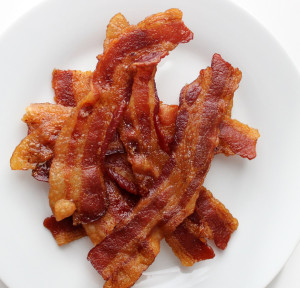
“You know, my mother used to say, ‘Everything in moderation,’” said National Pork Producers Council President Dr. Ron Prestage, a veterinarian and pork producer from Camden, S.C. “She was a very smart woman, and the smart people out there know you don’t eat a pound of anything every day. So take this IARC report with a grain of salt, but not too much salt because that would be bad for you.”
The IARC classifications on meat, said NPPC, were reached after including studies that did not have statistically significant results, meaning the conclusions are questionable. In fact, IARC’s conclusions were based on “relatively weak statistical associations from epidemiological studies that were not designed to show cause and effect.” In many of the studies, cancer risks were only associated with high levels of consumption.
In a May 2015 review of epidemiological studies on cancer and meat, David Klurfeld, with the U.S. Department of Agriculture’s Agricultural Research Service, found: “Most observational studies report small, increased relative risks [of cancer]. However, there are many limitations of such studies, including inability to accurately estimate intake, lack of pre-specified hypotheses, multiple comparisons, and confounding from many factors – including body weight, fruit/vegetable intake, physical activity, smoking, and alcohol – that correlate significantly either positively or negatively with meat intake and limit the reliability of conclusions from these studies.”
IARC did note that most colorectal cancers are caused by more than one agent and that cancer trends are related to the amount of an agent or agents consumed. A monograph on the agency’s conclusions is expected to be published next summer or fall.
NPPC, which had a representative at the IARC meeting, said many studies show that eating lean, protein-packed and nutrient-dense processed meats such as ham can help fight obesity, which is universally accepted as one of the leading causes of cancer.
According to the National Institutes of Health’s National Cancer Institute, obesity and physical inactivity may account for 25 to 30 percent of several major cancers, including colon cancer. The institute has noted that a 2002 “major” review of observational trials showed that physical activity reduced colon cancer risk by 50 percent: www.cancer.gov/about-cancer/causes-prevention/risk/obesity/obesity-fact-sheet.